
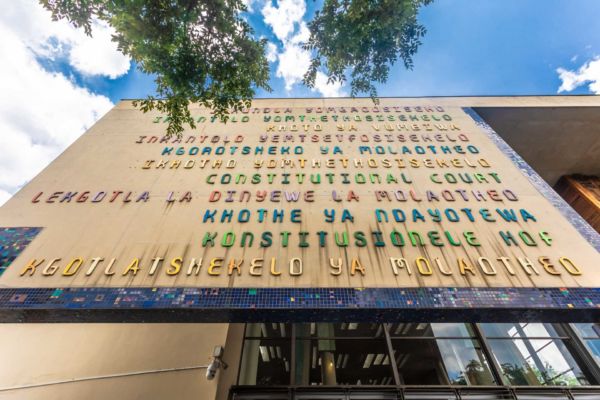
The Constitutional Court clarifies the limits of judicial review in Famous Idea Trading 4 (Pty) Ltd t/a Dely Road Courier Pharmacy v Government Employees Medical Scheme and Others (CCT 266/24) [2026] ZACC 5.
In a judgment that carefully delineates the boundary between public law review and private commercial disputes, the Constitutional Court (“the Court”) has set an important precedent in Famous Idea Trading 4 (Pty) Ltd t/a Dely Road Courier Pharmacy v Government Employees Medical Scheme and Others [2026] ZACC 5.
In a unanimous judgment authored by Musi AJ, the Court settled the position that not every unsuccessful bidder is entitled to subject a private entity’s procurement decision or process to judicial review, nor to demand a Rule 53 record. The Court held that where a procurement process and its outcome are purely commercial in nature and do not constitute the exercise of public power, public law remedies such as review proceedings and the production of a record of proceedings are generally not available.
The judgment provides much-needed direction on the relationship between the Promotion of Administrative Justice Act 3 of 2000 (PAJA), the principle of legality, and the common law, particularly in the context of procurement by private entities.
Factual background
The dispute stems from a tender issued by the Government Employees Medical Scheme (“GEMS”) in 2022. GEMS invited service providers to bid for the provision of courier pharmacy services. Famous Idea Trading 4 (Pty) Ltd t/a Dely Road Courier Pharmacy (“Famous Idea”) submitted a bid in response.
Following the conclusion of the evaluation process, GEMS appointed a joint venture between Marara Pharmacy (Pty) Ltd t/a Medipost Pharmacy and Pharmacy Direct (Pty) Ltd, as well as HH Durrheim (Pty) Ltd t/a Medipost Pharmacy, as preferred bidders.
Aggrieved by the outcome, Famous Idea instituted review proceedings in the High Court seeking to have GEMS’ decision set aside under PAJA, the principle of legality, or the common law, and further sought an order awarding it the tender. In the application, it further sought delivery of the record of proceedings in terms of Rule 53 of the High Court Rules.
GEMS refused to file the Rule 53 record. Instead, it delivered a notice in terms of Rule 6(5)(d)(iii), raising a point in limine that its decision was not subject to judicial review on the basis that, inter alia, it was neither an organ of state nor exercising public power and therefore that the court did not have jurisdiction to hear the matter.
The High Court upheld GEMS’ point in limine, refused to compel production of the record, and dismissed the application with costs. Applications for leave to appeal were dismissed by both the High Court and the Supreme Court of Appeal, prompting Famous Idea to approach the Constitutional Court.
Before the Constitutional Court, Famous Idea contended, among other things, that its rights under Sections 33 and 34 of the Constitution had been infringed. It argued that it was entitled to the Rule 53 record to make out its case and that the court’s jurisdiction should be determined only after the record had been produced.
Issues in dispute
The issues before the Court included:
- whether GEMS exercised a public power or function in procuring goods and services, and if not, whether its decision was reviewable under private law;
- whether GEMS’ decisions constituted administrative action;
- whether Rule 6(5)(d)(iii) applies in the context of Rule 53 proceedings;
- whether the Court had jurisdiction and whether leave to appeal should be granted, including the issue of mootness; and
- whether Rule 53 is applicable to private law reviews.
Analysis
The Court granted leave to appeal on the basis that the matter raised important legal questions of public significance. However, it rejected Famous Idea’s contention that a Rule 6(5)(d)(iii) notice is not competent in Rule 53 proceedings.
The Court held that Rule 53 must not be interpreted in isolation and is subject to the general rules governing motion proceedings. A preliminary legal objection is a competent procedural mechanism through which a respondent may show cause why a decision should not be reviewed.
Rule 6 governs all applications, including those brought under Rule 53. Rule 53(1)(a) itself requires a respondent to show cause why a decision should not be reviewed. A notice in terms of Rule 6(5)(d)(iii) is therefore a legitimate means of doing so.
To hold otherwise would compel a respondent to produce an extensive and intrusive record even where a court lacks jurisdiction. The Court aligned itself with the minority judgment in Murray and Others NNO v Ntombela and Others 2024 (4) SA 95 (SCA), which held that the rules presuppose that a Rule 6(5)(d)(iii) notice may precede any supplementary founding affidavit.
Overruling Murray and POLMED
The Court held that the majority judgment in Murray was incorrectly decided, as it misapplied the precedent in Standard Bank. It further held that the full court decision in POLMED, which followed Murray, was likewise wrongly decided.
Restating the principles in Standard Bank, the Court emphasised that a court must be satisfied that it has jurisdiction before making any order, including an order compelling production of a record. Jurisdiction cannot be established on the basis that the record might later provide it.
A review court must be able to establish jurisdiction from the founding papers alone. The enquiry is whether the facts alleged, if proven, establish a legal basis for the exercise of review jurisdiction, not whether the review will succeed on the merits.
GEMS was not exercising public power
The Court found that Famous Idea failed to establish that GEMS was exercising public power. It confirmed that GEMS is a restricted medical scheme and a private entity, consistent with the Supreme Court of Appeal’s decision in Government Employees Medical Scheme v Public Protector of the Republic of South Africa. Although GEMS operates within a regulated environment, its decisions are taken for the benefit of its members.
The Court acknowledged that private contractual powers are not absolute and may, in certain circumstances, be subject to review in terms of common law. This arises where a contract confers a discretionary decision-making power that must be exercised honestly, in good faith, and not arbitrarily or capriciously. Alternatively, a review may arise where a legitimate expectation is established, as recognised in Bae Estates.
However, Famous Idea did not plead that the tender conditions gave rise to a contract between itself and GEMS, nor did it plead facts establishing a legitimate expectation. It sought to review the decision without laying the necessary contractual foundation. Accordingly, no basis for common law review was established.
The Court also rejected the argument that the matter was moot, noting that the contract was renewable and governed an ongoing relationship.
It therefore held that a Rule 6(5)(d)(iii) notice is a competent mechanism to challenge jurisdiction at the outset of Rule 53 proceedings.
Conclusion
The Court concluded that GEMS was acting as a private entity selecting a supplier, not as a public body exercising public power. In the absence of a pleaded contractual basis or a recognised ground of review, Famous Idea’s claim could not succeed.
The judgment confirms that a right to a Rule 53 record is not automatic. An applicant must first establish a prima facie basis for review in its founding papers.
More broadly, the decision underscores that a right to review does not extend to every commercial decision made by a private entity. Under the common law, a contractual foundation incorporating fairness principles or a legitimate expectation must be shown. Absent these elements, courts will not intervene.
The appeal was dismissed with costs, including the costs of two counsel.
Oarabile Modiko is an associate in our Commercial department.